Phone:
(701)814-6992
Physical address:
6296 Donnelly Plaza
Ratkeville, Bahamas.

Phone:
(701)814-6992
Physical address:
6296 Donnelly Plaza
Ratkeville, Bahamas.
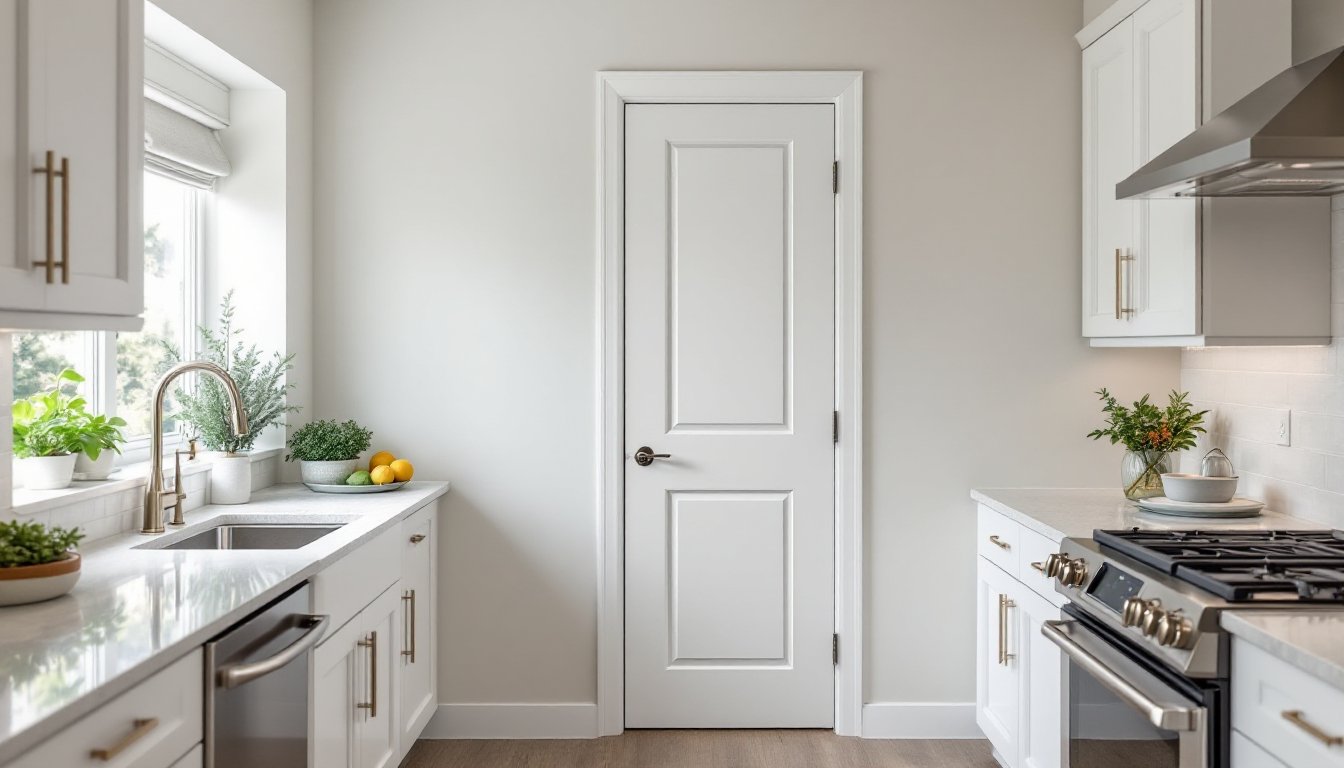
A pantry without a door is like leaving your kitchen perpetually half-finished. Not only does an open pantry shelf expose clutter and dust to your living space, but it also wastes valuable real estate that could be hidden, climate-controlled, and far more organized. Whether you’re renovating your kitchen or simply tired of staring at mismatched cans and expired boxes, the right pantry door transforms how your kitchen functions and feels. This guide walks you through the types of pantry doors available, how to pick one for your space, and what you need to know about installation so you can make a confident choice.
A pantry door does far more than hide what’s inside, it defines how organized and functional your kitchen truly is. Without a door, items are constantly visible, collecting dust and creating visual clutter. A closed pantry maintains consistent temperature and humidity, which extends the shelf life of dry goods, baking supplies, and canned items. It also seals in cooking odors and steam that would otherwise drift into adjacent rooms.
Beyond the practical benefits, a closed pantry signals intentional kitchen design. It creates visual breathing room, makes the space feel larger, and gives you the freedom to organize with a specific method without worrying about aesthetics every time someone opens the closet. Most homeowners discover that once they install a pantry door, they’re far more likely to stick to pantry closet organization ideas that actually work, rather than abandoning systems because the space feels too exposed. A door also protects contents from pets, small children reaching unsupervised, and accidental spills from nearby activity.
The pantry door market offers several solid options, each with distinct advantages depending on your space constraints, aesthetic preferences, and budget.
Swing doors are the most common choice and come in single or double configurations. A standard single swing door requires a clear swing radius, typically 24 to 32 inches of unobstructed floor space in front of the opening. Double doors work well for wider pantries and create a more formal appearance, though they demand twice the clearance. Bifold doors fold flat against the frame when opened, making them ideal for tight kitchens where a swinging door would block traffic or an adjacent appliance.
Swing doors feel traditional, are easy to customize with paint or hardware, and work with almost any kitchen style. But, they demand real estate when opened, and if your pantry faces a hallway or dining area, an inward-swinging door might hit foot traffic patterns during cooking. Bifolds save space but have a narrower opening, you can’t carry a large box or reach items as easily. Both types mount directly to the existing framed opening, which makes installation straightforward if the frame is square and plumb.
Sliding doors glide on overhead or floor-mounted tracks and don’t require swing clearance, making them perfect for galley kitchens and compact layouts. Pocket doors slide into the wall cavity itself, leaving no visible door at all when open, they’re the space-saving champions. Sliding barn doors (also called sliding glass doors with decorative frames) have become trendy and can add rustic or industrial character to a kitchen.
The trade-off: sliding mechanisms require maintenance. Tracks collect dust and debris, and if the floor is uneven, the door can bind or derail. Pocket doors need a hollow cavity in the wall during framing, retrofitting one into an existing wall is expensive and may require removing wallboard and relocating utilities. Sliding barn doors are heavy and need robust hardware, plus they don’t seal as quietly as swing or bifold options. For modern kitchens with minimal visual disruption, they’re excellent: for traditional spaces, they may feel out of place.
Start by measuring your pantry opening, noting the width, height, and depth of the available frame. Measure twice, doorways are often slightly out of square, and modern pantry doors need precision for smooth operation. Look at your kitchen layout and identify the swing clearance available. If a swing door would collide with an island, dining chair, or refrigerator, a sliding or bifold option makes more sense.
Consider your kitchen’s style and existing hardware. A traditional kitchen with shaker cabinets and brush nickel knobs suits a solid wood swing door painted to match the cabinetry. A contemporary kitchen with glass-front upper cabinets might benefit from a glass insert or frosted-panel bifold door. If you’re pursuing pantry organization ideas, remember that the door itself doesn’t organize, but it frames and contains the system you create inside.
Finish is another critical choice. Paint, stain, or even wallpaper (on panel doors) all work, but consider ease of cleaning. A pantry door near cooking zones will accumulate steam and grease, so gloss or semi-gloss paint is far more wipeable than flat finishes. Hardware, hinges, handles, soft-close mechanisms, should match your cabinet hardware for cohesion. Soft-close hinges cost more upfront but prevent the door from slamming and damaging adjacent items or startling household members.
Budget varies widely. Basic hollow-core swing doors with builder-grade hinges run $75–$200. Solid wood doors, glass-panel bifolds, or custom sliding systems start at $300–$800 before hardware and installation.
Installation complexity depends on the door type. Swing and bifold doors are usually DIY-friendly if the opening is square and the frame is solid. Check the opening with a level and measuring tape, if the frame is severely out of plumb or the sill is damaged, you may need to shim or reinforce it first. Most doors come with template guides that show hinge placement and hole drilling. Pre-drilling is critical: splitting a door frame is an easy mistake when installing hinges or hardware.
Sliding doors and pocket doors are more involved. Sliding track systems must be level and secure: even a 1/8-inch slope causes binding. Pocket doors require wall cavity preparation and often demand professional installation unless you’re experienced with drywall repair. Barn doors need robust wall anchors, not just nails, check your wall construction (drywall over studs, plaster, etc.) and use appropriate fasteners rated for the door weight.
Safety first: Always wear safety glasses when drilling or cutting. If you’re unsure about the structural integrity of the opening or the wall, consult a contractor.
Maintenance is straightforward. Keep tracks clean with a dry brush and vacuum regularly, dust buildup is the main cause of sluggish doors. Wipe down hinges and mechanisms monthly. Soft-close dampers occasionally need adjustment if they start to move slowly. Check hardware fasteners every six months: vibration from a busy kitchen can loosen bolts and screws. If your door is solid wood, avoid extreme humidity swings (which cause warping): a pantry door near a dishwasher may benefit from additional ventilation to reduce moisture exposure.
Resources like Ana White’s free DIY plans offer detailed build guides for custom wood pantry doors, while sites like Fix This Build That provide step-by-step installation videos for common door hardware. For those tackling their first project, The Handyman’s Daughter offers beginner-friendly tutorials that demystify the process.
A pantry door is one of the highest-impact upgrades a homeowner can make without requiring structural work. Whether you choose a classic swing door, space-saving sliding system, or a trendy barn-style alternative, the key is matching the door type to your kitchen’s layout, style, and your realistic DIY skill level. Measure carefully, choose hardware that coordinates with your existing cabinetry, and don’t skip prep work or clearance planning. Once installed, a properly functioning pantry door keeps your space organized, protected, and polished, and makes every meal prep session feel intentional.
