Phone:
(701)814-6992
Physical address:
6296 Donnelly Plaza
Ratkeville, Bahamas.

Phone:
(701)814-6992
Physical address:
6296 Donnelly Plaza
Ratkeville, Bahamas.
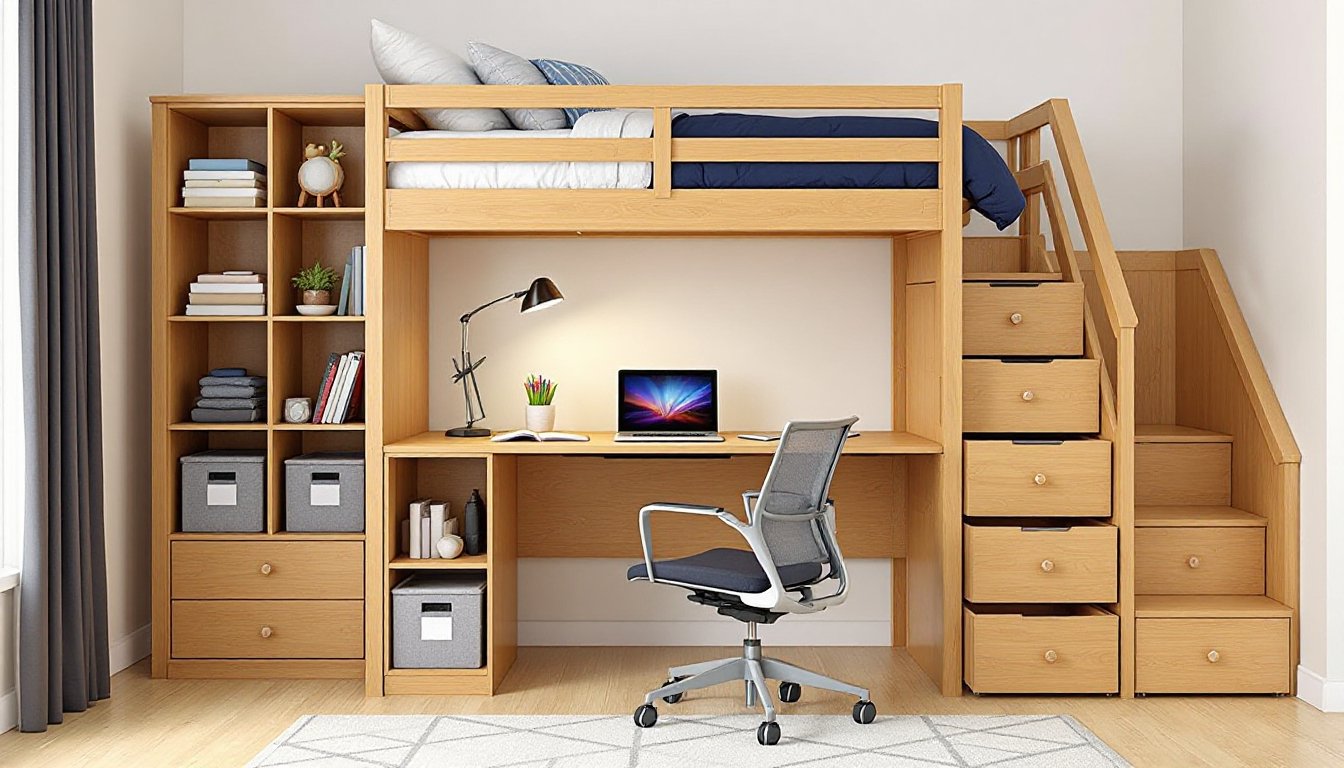
Small bedrooms, shared kids’ rooms, and tight urban apartments all face the same challenge: too much function crammed into too little square footage. A bunk bed with desk and storage tackles that problem head-on, stacking sleep, study, and organization into a single footprint. These multipurpose units aren’t just for cramped dorms anymore, modern designs range from sleek metal lofts with minimalist desks to full wood constructions with built-in dressers and bookshelves. Whether outfitting a teenager’s room or maximizing a guest space that doubles as a home office, understanding configuration options and structural requirements ensures the setup works safely and efficiently.
The math is simple: a twin mattress occupies roughly 39 × 75 inches of floor space. Add a separate desk (48 × 24 inches minimum) and a bookcase or dresser (30 × 18 inches), and that’s nearly 40 square feet consumed. A loft or bunk combo consolidates those three pieces into the same twin-bed footprint, freeing up floor area for movement, play, or additional furniture.
Beyond square footage, integrated units solve clutter. Built-in shelves, drawers, and cubbies keep school supplies, clothes, and electronics corralled in dedicated zones rather than piled on chairs or floors. That’s especially valuable in shared rooms where two kids need distinct work and storage areas without a visual mess.
Structurally, quality combos distribute weight across a single reinforced frame rather than relying on freestanding furniture that can tip or shift. Look for units rated to at least 250 pounds on the upper bunk (some commercial-grade models handle 400+ pounds) and verify that desk shelves can support 50–75 pounds per linear foot if holding textbooks or a monitor.
Finally, these setups grow with the occupant. A loft desk works for a seven-year-old doing assignments and a seventeen-year-old editing video. Modular storage, removable bins, adjustable shelves, adapts as needs shift from toys to tech gear.
Configuration dictates workflow, safety clearances, and room layout. The two dominant styles each suit different spaces and user ages.
A loft elevates the mattress 5 to 6 feet off the floor, leaving the entire footprint below for a desk and storage. The desk typically spans the width of the bed (twin = ~39 inches, full = ~54 inches) with overhead clearance between 48 and 60 inches, enough for a seated adult if the loft height is closer to 6 feet.
Storage in loft setups appears as side-mounted shelves, rolling carts, or a combination hutch-and-drawer unit tucked beside the desk. Some designs incorporate a staircase with built-in drawers instead of a ladder, trading a slightly larger footprint for safer access and hidden storage.
Key advantage: Maximum floor space remains open. A child can sit at the desk, swivel to a reading chair, or roll out a yoga mat without rearranging furniture.
Drawback: Ceiling height matters. Standard 8-foot ceilings leave minimal clearance above the mattress, making bed-making awkward and creating a cave-like feel. Measure twice: mattress thickness (usually 6–10 inches) plus the loft frame height should leave at least 36 inches between the mattress top and ceiling for comfortable sitting. Those interested in maximizing the area under a loft can reference detailed under-loft desk systems that show how to build modular components.
Traditional bunks stack two mattresses vertically, with storage built into the frame itself: drawers in the lower bunk’s base, shelves in the headboard or footboard, or a pull-out trundle that doubles as a drawer. The desk component is either a fold-down panel mounted to the side rail or a separate unit positioned perpendicular to the bunk.
Key advantage: Two sleepers in the same footprint. Shared kids’ rooms benefit from individual sleep zones plus communal storage.
Drawback: Desk integration is tighter. Fold-down desks rarely exceed 20 inches deep, fine for a laptop but cramped for spreading out art supplies or textbooks. If the desk is freestanding, it eats into the space savings.
Hybrid models exist: a twin-over-full bunk where the lower full mattress extends beyond the upper twin, creating an L-shaped alcove for a desk. These work well in corner placements but require at least 10 × 10 feet of floor space to avoid a boxed-in feel.
Not all combo units are built equally. Prioritize these structural and functional details before buying.
Material and joinery: Solid wood (pine, oak, birch) or 11-gauge steel tubing provides the best longevity. Particleboard and MDF show up in budget models but sag under repeated weight and humidity. Check joints, mortise-and-tenon or bolted steel brackets outlast cam-lock assembly hardware common in flat-pack furniture.
Guardrails and ladder design: Upper bunks require guardrails on all open sides, with a maximum gap of 3.5 inches between slats or panels (per CPSC guidelines). Ladders should be angled rather than vertical for easier climbing: some parents prefer staircases with handrails, especially for kids under eight.
Desk dimensions and weight capacity: A functional desk needs at least 24 inches of depth and 36 inches of width. Verify the desktop can support 75–100 pounds if it’ll hold a desktop computer or a stack of textbooks. Adjustable-height desks are rare in integrated units but worth seeking for growing kids.
Storage accessibility: Drawers should glide on ball-bearing slides rather than plastic tracks, which bind or crack. Open shelving is easier for younger kids: doors and bins suit teens who want a cleaner look. Count the cubbies: a typical loft-desk combo offers 6–10 compartments: traditional bunks might have 3–4 drawers in the base.
Finish and safety: Look for low-VOC or water-based finishes, especially important in a kid’s breathing zone. Sharp corners should be rounded or capped with plastic bumpers. If choosing metal, powder-coated frames resist chipping better than spray paint.
Assembly and anchoring: Even prebuilt units require wall anchoring to prevent tipping. Expect 2–4 L-brackets mounted into wall studs, not drywall anchors, for a loft or bunk rated above 250 pounds. Budget 3–5 hours for two-person assembly if buying flat-pack: one person can’t safely hold rails while tightening bolts.
These units shine in specific scenarios but can feel forced in others.
Shared kids’ rooms (8 × 10 feet or smaller): Two bunks with desks eliminate the need for separate workstations. Position the desk ends facing each other to create a shared study zone or angle them into opposite corners for privacy.
Teen bedrooms doubling as creative studios: A loft setup leaves floor space for an easel, instrument, or gaming chair. Mount pegboard or magnetic strips on the wall beside the desk for art supplies or cable management.
Guest rooms with home-office overlap: A loft bed keeps a guest mattress ready without sacrificing daily desk use. Choose a full-size loft (54 × 75 inches) to accommodate adult guests: standard twin lofts feel cramped for anyone over six feet.
Basement or attic conversions: Sloped ceilings in finished attics pair well with loft beds, position the desk under the low side and the loft where ceiling height peaks. Always verify egress window requirements (IRC mandates a 5.7-square-foot opening and 24-inch height for sleeping rooms) before installing a bunk in a basement bedroom.
Not ideal for: Toddlers under six (fall risk from upper bunks), rooms with ceiling fans directly above the bed, or spaces where an adult can’t comfortably stand beside the upper mattress to change sheets. If the primary user has mobility challenges, a loft may not be practical.
Off-the-shelf units rarely fit every need perfectly. Small modifications add function without requiring advanced carpentry.
Add task lighting: Stick-on LED puck lights or a clamp-on desk lamp eliminate shadows. For upper bunks, install a reading light with a flexible gooseneck on the headboard, wireless, battery-operated models avoid running cords near the mattress.
Build a custom hutch: If the included desk lacks overhead storage, cut a 1 × 12 pine board to match desk width and mount it 18 inches above the desktop using L-brackets into wall studs. Add small bins or mason jars for pens and charging cables. Platforms like Instructables offer step-by-step plans for beginner-friendly hutch builds.
Install pegboard or slat wall: A 2 × 4-foot pegboard panel mounted to the wall beside the desk holds headphones, backpacks, or tool organizers. Paint it to match the room or leave natural for an industrial vibe.
Upgrade drawer pulls and add labels: Factory knobs are often flimsy plastic. Swap them for brushed-nickel or matte-black pulls (about $2 each at hardware stores). Label bins or drawers with a label maker or chalkboard paint for younger kids still learning organization.
Create a charging station: Drill a 1-inch hole through the desktop back corner (if solid wood) and thread a power strip underneath. Use adhesive cable clips to route cords along the desk leg. Keeps devices charged without a tangle of wires on the work surface.
Modify IKEA or modular pieces: Budget-conscious DIYers often hack flat-pack furniture to fit under lofts. A pair of IKEA ALEX drawer units (each 14 × 27 inches) with a countertop laid across them forms a custom desk that fits most loft widths. IKEA Hackers catalogs hundreds of examples with cut lists and hardware specs.
Safety note: Any modification that affects structural integrity, cutting bed rails, drilling into load-bearing frame members, voids warranties and risks collapse. Stick to non-invasive add-ons unless working with an engineer or experienced carpenter.
