Phone:
(701)814-6992
Physical address:
6296 Donnelly Plaza
Ratkeville, Bahamas.

Phone:
(701)814-6992
Physical address:
6296 Donnelly Plaza
Ratkeville, Bahamas.
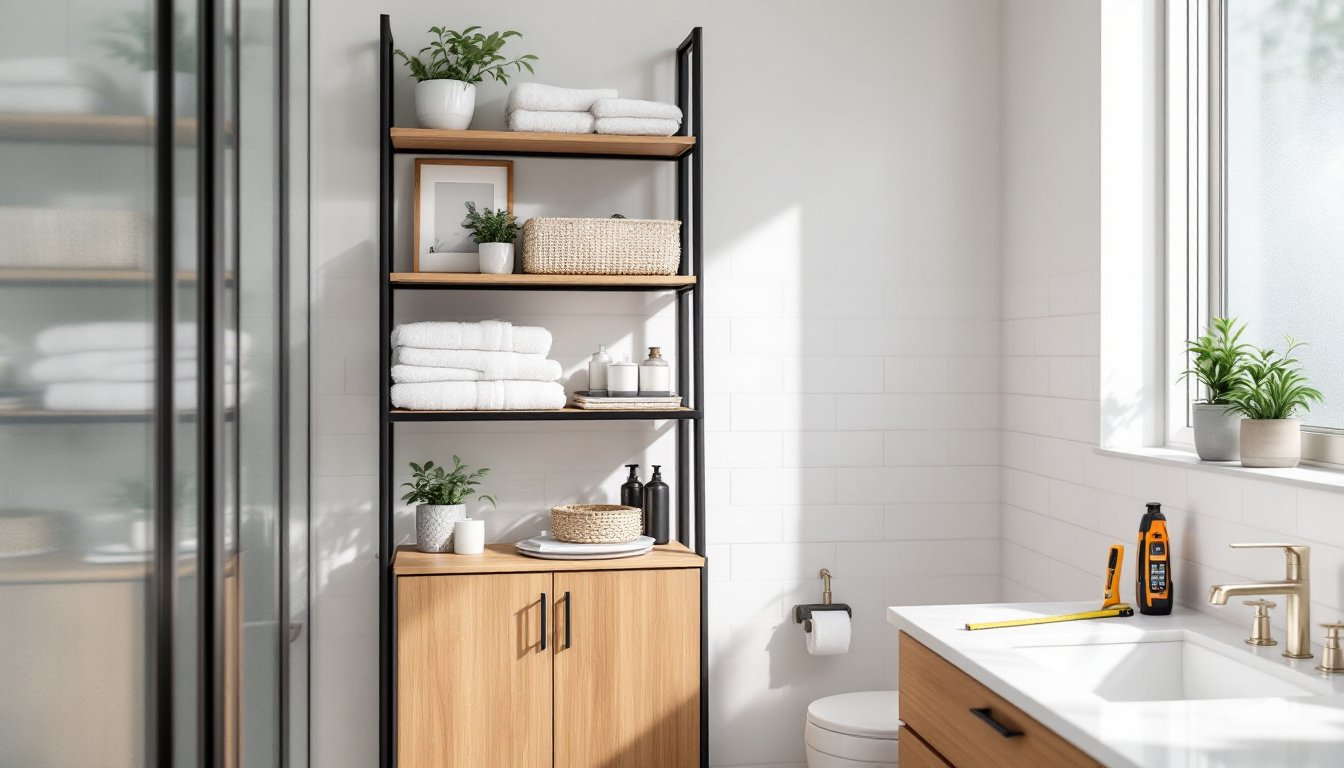
Bathrooms are usually the smallest room in the house, and yet they’re expected to store towels, toiletries, cleaning supplies, and that growing collection of half-empty shampoo bottles. The dead space above the toilet is one of the most underused square footages in any home. Over the toilet racks fix that. They turn an awkward 24-inch gap into real, working storage without eating into floor space or requiring a renovation. Here’s how to pick the right one, install it safely, and actually keep it organized.
The average American bathroom is about 40 square feet, and powder rooms are often half that. When floor space is locked up by a vanity, tub, and toilet, the only direction left is up.
Over the toilet racks take advantage of vertical real estate that’s already there. They keep daily-use items at arm’s reach, free up vanity drawers, and can hide unsightly plumbing behind a cabinet door. For renters, freestanding units are landlord-proof. For homeowners, wall-mounted versions look built-in and add resale appeal.
It’s a low-cost upgrade, too. Most units run $40 to $250, depending on material and style, though regional pricing and finish quality will move that range.
Not every bathroom needs the same solution. The right pick depends on ceiling height, wall material, plumbing access, and whether the user rents or owns. The two most common formats are freestanding étagères and wall-mounted shelving.
An étagère is a tall, open shelving unit with legs that straddle the toilet tank. They’re the easiest option because there’s no drilling involved. Most assemble in 20 to 30 minutes with an Allen key.
Look for units rated to hold at least 15 pounds per shelf and with adjustable feet for uneven tile. Metal frames (powder-coated steel or stainless) resist humidity better than particleboard. The downside? They can wobble if the floor isn’t level, and toddlers or pets can tip lightweight models. Apartment Therapy’s guides on renter-friendly storage fixes consistently rank étagères as the top no-commitment solution.
Wall-mounted racks float above the tank and anchor directly into the wall. They look cleaner, hold more weight, and won’t tip. The trade-off is installation: they require locating studs or using heavy-duty drywall anchors rated for the load.
Use a stud finder and aim to hit at least one stud per bracket. If studs aren’t where they need to be, toggle bolts rated for 30+ pounds are the next best option. Skip plastic expansion anchors for anything heavier than a roll of toilet paper.
A cabinet-style over toilet cabinet combines open shelves up top with closed doors below, hiding the visual clutter of backup toiletries, medications, or cleaning supplies. These are the workhorses of small-bathroom storage.
Most bathroom cabinet above toilet units measure 22 to 26 inches wide and 64 to 72 inches tall, sized to clear a standard toilet tank with 2 to 4 inches of side clearance. Before buying, homeowners should measure from the floor to the top of the tank, then from the tank to any ceiling fixture or vent.
Material matters in a humid room. MDF with a sealed finish holds up reasonably well, but solid wood or bamboo lasts longer. For a budget above toilet cupboard, sealed engineered wood is fine, just keep it away from direct shower spray. Real Simple’s roundup of over-toilet storage ideas breaks down material durability in more detail.
Safety note: Even freestanding cabinets should be anchored to the wall with an anti-tip strap, especially in homes with kids.
Picking the right unit comes down to four practical questions. Working through them in order saves a return trip to the store.
Tools needed for most installs: stud finder, level, drill, tape measure, pencil, and the right anchors for the wall. A second set of hands helps when lifting a tall cabinet over the toilet, these units are awkward, not heavy.
An empty rack is potential. A cluttered rack is just a taller mess. The trick is treating each shelf as a zone with a purpose.
Martha Stewart’s bathroom organization tips recommend the “like with like” rule: group skincare together, hair products together, and so on. It sounds obvious, but it cuts daily search time in half.
A few finishing touches go a long way. Use adhesive shelf liner to protect wood from drips. Add small LED puck lights under shelves if the bathroom runs dim. And resist the urge to fill every inch, negative space is what makes storage look intentional instead of crammed.
