Phone:
(701)814-6992
Physical address:
6296 Donnelly Plaza
Ratkeville, Bahamas.

Phone:
(701)814-6992
Physical address:
6296 Donnelly Plaza
Ratkeville, Bahamas.
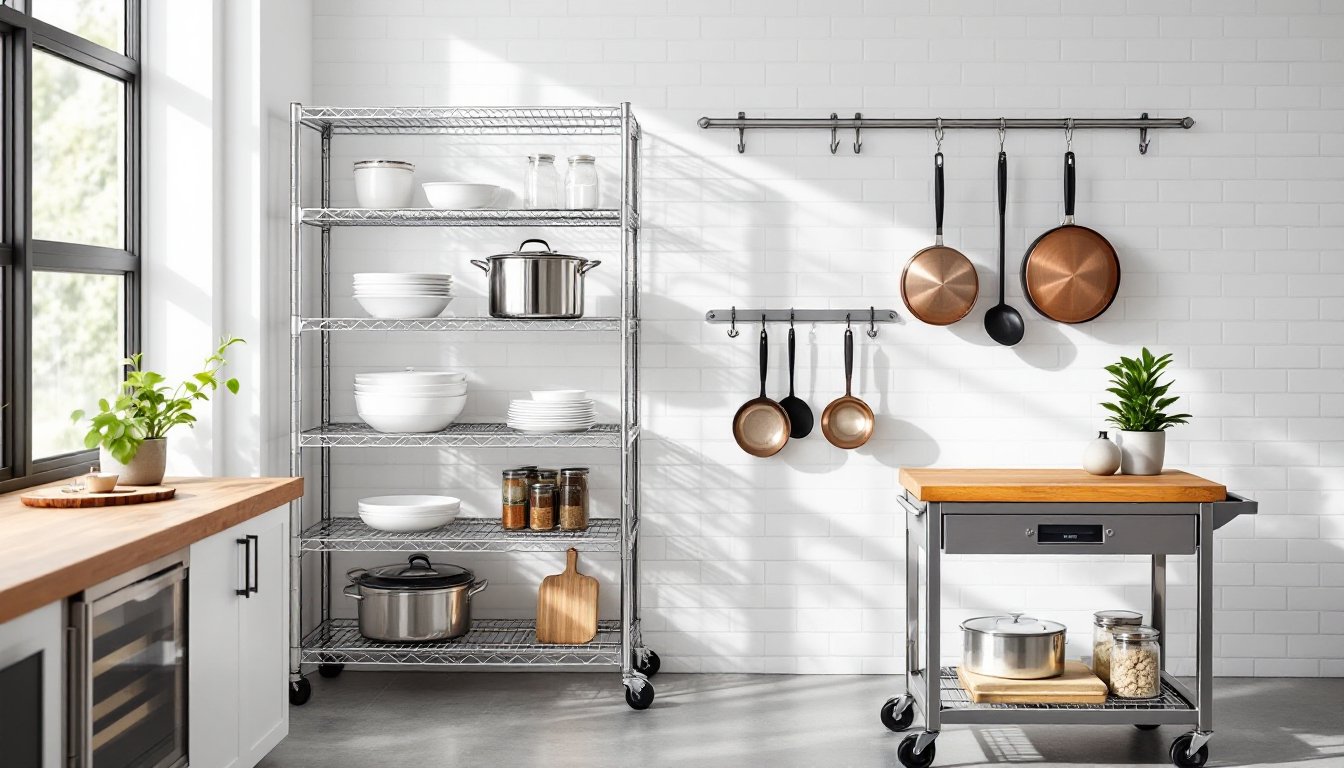
Homeowners craving serious cooking space are turning to commercial-grade storage to solve the same problem every home kitchen faces: too much gear, not enough room. Restaurant-style shelving, wall rails, and modular systems aren’t just for pros anymore. They’re built to handle weight, resist moisture, and maximize every vertical inch, qualities that make sense whether you’re plating fifty covers or meal-prepping for the week. This guide walks through the commercial storage systems that translate best to residential use, how to install them without violating code, and what to expect in terms of cost and difficulty.
Commercial kitchen storage is engineered for durability and density. Restaurant shelving units are rated to carry 200–800 pounds per shelf, compared to typical residential wire racks that max out around 250 pounds total. Stainless steel resists corrosion from steam, splashes, and sanitizers, making it ideal for kitchens that see heavy use.
Another advantage: modularity. Commercial systems use standardized posts and shelves that adjust on one-inch increments, so you can reconfigure as your needs change. No fumbling with proprietary clips or brackets. Most units are NSF-certified, meaning they meet food-safety standards for cleanability, rounded corners, smooth welds, no crevices where gunk hides.
From a code perspective, commercial shelving is non-combustible and doesn’t obstruct sprinkler coverage the way solid cabinetry might. Check local building codes if you’re retrofitting a kitchen in a multi-family building: some jurisdictions require fire-rated assemblies in shared walls. For single-family homes, open metal shelving is almost always fine.
The trade-off is aesthetics. Stainless and chrome don’t hide clutter the way closed cabinets do. If your pots are dented or your spice jars don’t match, they’ll be on display. That said, the open layout forces you to keep things organized, a feature, not a bug, for serious home cooks.
Wire shelving (often called Metro-style after one major brand) is the workhorse of commercial kitchens. Posts are typically 74 inches tall for floor-to-ceiling installs, with shelf depths of 18, 21, or 24 inches and widths from 36 to 72 inches. Shelves are epoxy-coated steel or solid stainless: the latter costs about 40% more but won’t chip if you bang a stockpot into it.
Installation is tool-free for the rack itself, shelves lock onto posts with split sleeves, but you’ll want to anchor tall units to the wall with L-brackets and lag screws into studs. Unanchored racks over 60 inches tall can tip if loaded unevenly. Use #10 × 2½-inch lag screws into wall studs, or toggle bolts rated for at least 100 pounds if you’re hitting drywall.
Expect to pay $150–$400 for a four-shelf unit, depending on size and finish. That’s competitive with high-end residential shelving, but you’re getting five times the load capacity. Solid stainless shelving (flat decks instead of wire) runs $250–$600 and is easier to clean but heavier and pricier.
One tip: measure your ceiling height before ordering. Standard 74-inch posts leave about two inches of clearance in an eight-foot room after you add shelf thickness and leveling feet. If you have nine-foot ceilings, look for 86-inch posts or stackable kits.
Pot racks and utensil rails reclaim counter space by hanging tools overhead or along backsplashes. Commercial rails use a 1½-inch diameter stainless tube mounted on brackets, with S-hooks for pots, ladles, and tongs. They’re rated for 50–75 pounds per linear foot when properly anchored.
Mount rails into studs wherever possible. For masonry or tile backsplashes, use tapcon screws or sleeve anchors, toggle bolts won’t hold in those materials. Space brackets no more than 32 inches apart to prevent sagging under load. If you’re mounting over a cooktop, keep the rail at least 30 inches above the burners to meet IRC clearances for combustibles (even though stainless is non-combustible, the items you hang may not be).
Grid systems (like the ones professional kitchens rely on) mount a perforated stainless panel to the wall, then accept modular hooks, shelves, and magnetic tool strips. They cost $80–$200 for a 24×36-inch panel plus accessories. Installation requires hitting at least two studs: use ¼-inch lag bolts through the panel’s pre-drilled holes.
Overhead pot racks (ceiling-hung) look dramatic but need solid attachment points. Locate ceiling joists with a stud finder, then install the rack’s mounting plate with ⅜-inch lag bolts driven at least 2½ inches into the joist. Never hang from drywall alone, a loaded pot rack can weigh 100+ pounds. If your joists run the wrong direction, install a 2×6 or 2×8 backer board across multiple joists, then mount the rack to that.
Vertical stacking is where commercial systems shine. In a 10×10 kitchen, swapping 30 inches of base cabinets for a 72-inch tall shelving unit can triple your usable storage without expanding the footprint. Store heavy appliances (stand mixers, Dutch ovens) on lower shelves at waist height to avoid lifting hazards. Reserve upper shelves for lightweight bulk goods, paper towels, dry pasta, backup dish soap.
Mobile carts with locking casters add flexibility. Commercial prep tables on wheels typically have a stainless top, undershelf, and 3-inch casters (two locking, two swivel). They’re not cheap, expect $200–$500 for a 24×48-inch unit, but they double as extra counter space when you’re prepping and roll out of the way for cleaning.
Many organizing strategies recommended by home experts emphasize clear containers and labels. In commercial settings, that’s standard practice: polycarbonate food-storage bins with snap lids keep dry goods visible and pest-proof. Use two- to six-quart bins for flour, rice, and sugar: label with a paint pen or printed adhesive tags. Stack them on wire shelves so you can see contents at a glance.
Drawer inserts and dividers help wrangle utensils. Commercial kitchens use slotted plastic or stainless inserts sized for standard drawer widths (12, 15, 18, 24 inches). They’re dishwasher-safe and replaceable, unlike the foam-lined trays sold for residential use. Measure your drawer interior (not the face frame) before ordering: commercial inserts assume full-extension ball-bearing slides, which many older home cabinets lack.
For pantry staples, can racks (gravity-fed sloped shelves) rotate stock automatically, oldest cans roll forward as you pull from the front. They’re overkill for a household of two, but if you buy in bulk or have kids who blow through canned goods, a 72-can rack ($40–$80) pays for itself in reduced waste.
Don’t overlook under-shelf baskets. These wire or mesh bins hang from the underside of a shelf and create an extra tier for lightweight items (dish towels, foil, sandwich bags). They’re cheap ($10–$20 each) and require zero installation, just slide the hooks over the shelf edge. In commercial kitchens, they’re everywhere: at home, they’re an easy win.
Finally, consider pegboard backsplashes behind your prep area. Mount ¼-inch tempered hardboard pegboard over a ½-inch spacer (use washers or short sections of PVC pipe) so hooks have clearance. Paint it with high-gloss enamel for easy wipe-down. This is a project that takes an afternoon but transforms accessibility, utensils, measuring cups, and cutting boards hang within arm’s reach. Many kitchen design resources showcase pegboard as both functional and visually appealing when done right.
Commercial storage systems bring restaurant-level capacity and durability to home kitchens without requiring a gut renovation. Stainless shelving, wall rails, and modular carts solve the universal problem of maximizing space while keeping tools and ingredients accessible. The upfront cost is comparable to quality residential options, but the longevity and load ratings are in a different league. Install anchors properly, plan for vertical space, and be ready to keep things visible, because once it’s up, there’s no hiding the mess.
