Phone:
(701)814-6992
Physical address:
6296 Donnelly Plaza
Ratkeville, Bahamas.

Phone:
(701)814-6992
Physical address:
6296 Donnelly Plaza
Ratkeville, Bahamas.
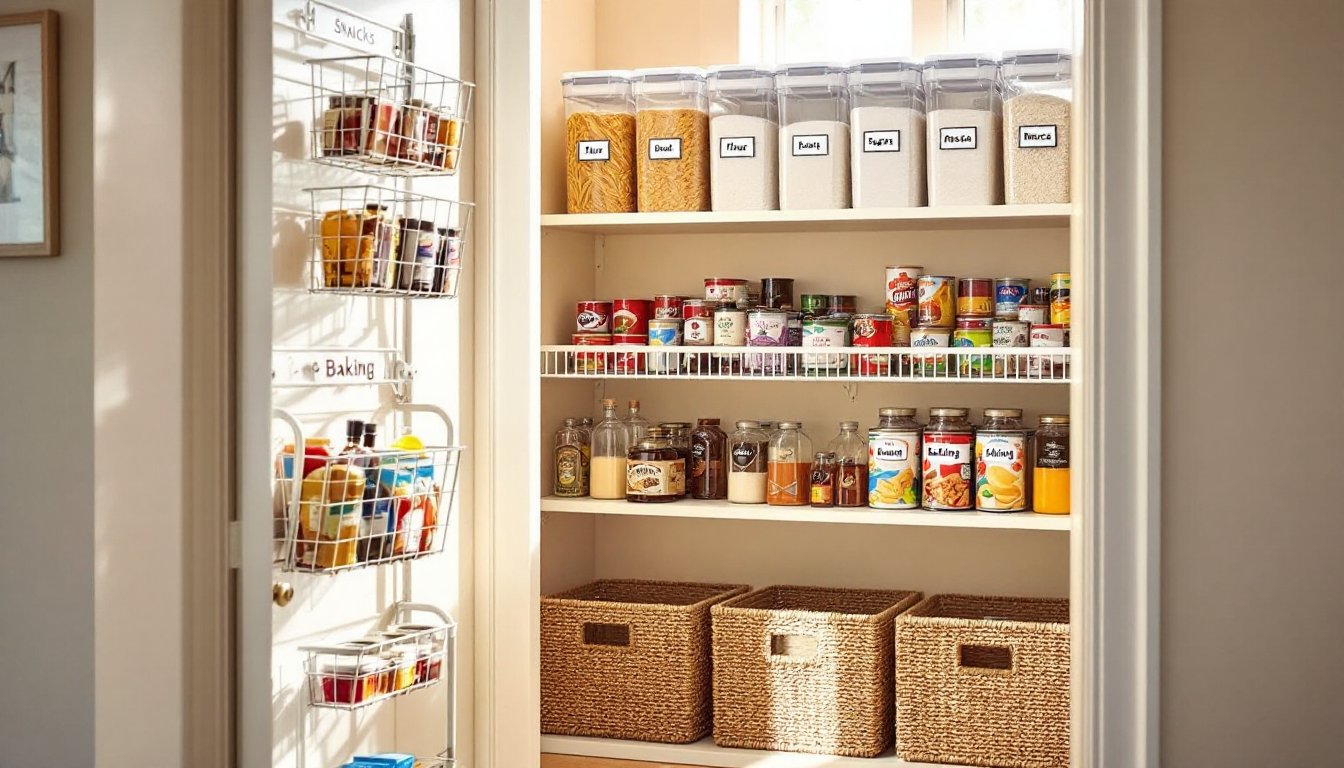
A cluttered pantry doesn’t just waste space, it wastes time, money, and food. You’ve probably tossed expired cans, bought duplicates of items already buried in the back, or stood staring at shelves wondering where to put groceries. The good news: most pantry chaos is fixable with a few smart strategies, not a full remodel. Whether you’re working with a walk-in closet or a single cabinet, organizing your pantry comes down to visibility, access, and maintenance. This guide walks through proven systems that turn any pantry into a functional, easy-to-use storage zone.
Before buying a single bin or shelf, empty the pantry completely. Yes, it’s tedious, but you can’t organize what you can’t see.
Pull everything out and check expiration dates. Toss expired items, consolidate partial packages, and set aside anything to donate. Group similar items on the counter, canned goods, baking supplies, snacks, grains, etc. This reveals what you actually have and how much space each category needs.
Measure the pantry interior: width, depth, and height of each shelf or section. Note the distance between shelves, this determines whether you can add risers or stackable bins. If you have wire shelving, measure the grid spacing: some organizers require solid shelves or shelf liners to sit flat.
Sketch a rough layout or take photos with a tape measure in frame. Knowing you have 12 inches of depth or 14 inches between shelves prevents buying organizers that don’t fit. Most pantry failures start here, guessing dimensions and ending up with containers that stick out or won’t stack.
Standard pantry shelves waste vertical space. A can of soup sits 3 inches tall, but the shelf above it might be 12 inches higher. Fill that gap.
Shelf risers are expandable platforms (usually metal or acrylic) that create a second tier on one shelf. They work well for canned goods, jars, and boxed items. Look for risers with adjustable width (typically 12–36 inches) so you can fit them to your shelf depth. Place shorter items in front, taller ones behind on the riser.
Stackable shelving units (free-standing wire or plastic racks) add an extra shelf without permanent installation. These are ideal for renters or anyone who doesn’t want to drill new holes. Just ensure the base is stable and the load capacity suits your needs, most hold 20–30 pounds per shelf.
If you have high ceilings or a walk-in pantry, consider adding an extra fixed shelf. Use shelf brackets rated for the load and screw them into wall studs, not just drywall. Adjustable shelf tracks (like those from closet systems) let you reposition shelves as your storage needs change. For canned goods and dry staples, practical kitchen organization plays a key role in reducing clutter and improving workflow.
Don’t forget the floor-to-ceiling vertical real estate. Tall, narrow rolling carts (often 6–12 inches wide) fit in tight gaps beside the fridge or pantry door and pull out for access.
Cardboard boxes and half-open bags are pantry killers. They tear, spill, attract pests, and hide what’s inside.
Switch to clear, airtight containers for dry goods: flour, sugar, rice, pasta, cereal, snacks, and baking supplies. Look for containers with silicone or rubber gasket seals, these keep moisture and bugs out better than snap-on lids. Square or rectangular shapes use space more efficiently than round jars.
Common sizes:
Buy sets with uniform sizes so they stack neatly. Mismatched containers waste space and look chaotic.
For bulk items like cereal or pet food, use larger bins with pour spouts or flip lids. These make it easy to dispense without removing the whole container from the shelf.
Transfer items immediately after grocery shopping. Write the expiration date on the container with a dry-erase marker or label. Many pantry organization strategies emphasize clear containers as the single biggest improvement for visibility and freshness.
Skip glass if you have young kids or high shelves, drops happen. BPA-free plastic or shatter-resistant acrylic is safer and lighter.
A well-organized pantry groups like with like. Zoning cuts search time and prevents buying duplicates.
Set up dedicated zones:
Place the zones based on frequency and height. Daily-use items (coffee, snacks, breakfast) go at eye level, 48–60 inches high. Heavy or bulk items (canned goods, large bags of rice) sit on lower shelves to reduce lifting and toppling risk. Rarely-used or special-occasion items (holiday baking supplies, serving platters) go up top.
Use bins or baskets to corral small items within each zone. A bin labeled “Baking” can hold yeast packets, food coloring, and sprinkles that would otherwise scatter. Pull the whole bin out to grab what you need.
If you have kids, create a kid-accessible snack zone on a low shelf with healthy, parent-approved options. This reduces constant requests and teaches independence.
Pantry doors and walls are underused real estate. Adding door-mounted or wall-mounted storage can double your capacity.
Over-the-door racks hang on the inside of the pantry door and hold spices, canned goods, snacks, or cleaning supplies. Look for models with adjustable shelves or baskets and check the door clearance, some doors won’t close if the rack is too deep. Standard over-the-door racks are 4–6 inches deep: measure your door swing to ensure it clears the shelves behind it.
For bifold or sliding doors, over-the-door racks won’t work. Instead, mount wire baskets or narrow shelves directly to the wall. Use wall anchors or toggle bolts if you’re not hitting studs, pantry items can add up to serious weight.
Pegboard or slat wall systems offer flexible, customizable storage. Mount a sheet of pegboard to the pantry wall and use hooks or baskets to hold utensils, cutting boards, foil, or bags. Rearrange hooks as needs change.
Magnetic strips (the kind used for knife storage) can hold metal spice tins on a side wall or inside the door, freeing up shelf space. Similarly, adhesive hooks can hang measuring cups, oven mitts, or reusable shopping bags.
If you have a walk-in pantry, consider a wall-mounted command center: a small bulletin board, shopping list notepad, or meal planning calendar. Keep it out of the way but visible. Many expert pantry ideas recommend using vertical surfaces to maximize every square inch.
Safety note: Don’t overload door racks. Most doors aren’t designed to carry more than 20–30 pounds. Distribute weight across multiple racks or move heavier items to shelves.
Labels aren’t just aesthetic, they’re functional accountability. If everyone in the household knows where things go, they’re more likely to put them back.
Label bins, baskets, shelves, and containers. Use a label maker for a clean, uniform look, or go with chalkboard labels and chalk markers for flexibility. Dry-erase labels work on smooth plastic or glass containers.
Be specific. “Snacks” is vague: “Granola Bars” and “Crackers” keep subgroups sorted. For containers, label the front and the lid, you’ll see the lid first when bins are stacked.
Include expiration dates or “opened on” dates for items that go stale or expire quickly: flour, baking powder, spices, nuts. A piece of masking tape on the bottom works if you don’t want a permanent label.
For families, picture labels help young kids or non-readers. Print or draw a small image of cereal, pasta, or crackers next to the word.
Revisit labels every few months. If your household’s needs change, say, you start baking bread weekly, adjust zones and labels accordingly. Labels should support your system, not lock you into a setup that no longer works.
Pantry organization isn’t about perfection, it’s about function. Start with a full inventory, measure your space, and build zones that match how you actually cook and eat. Use vertical space, clear containers, and labels to keep everything visible and accessible. The goal is a system that takes five minutes to maintain, not five hours to redo every month. A little planning now means less wasted food, fewer duplicate purchases, and a lot less frustration the next time you need that can of tomatoes.