Phone:
(701)814-6992
Physical address:
6296 Donnelly Plaza
Ratkeville, Bahamas.

Phone:
(701)814-6992
Physical address:
6296 Donnelly Plaza
Ratkeville, Bahamas.
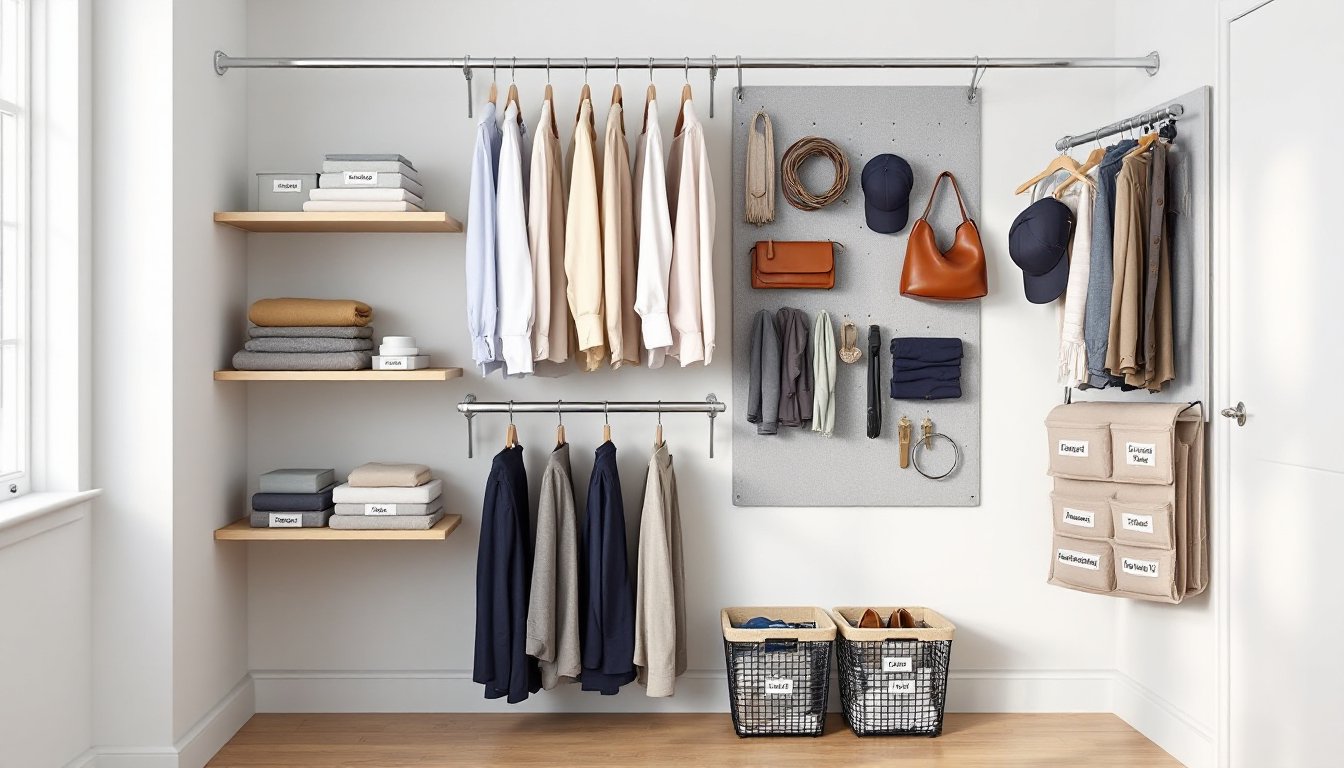
Most bedroom closets measure just 24 to 30 inches deep and 4 to 8 feet wide, yet they’re expected to hold an entire wardrobe, seasonal gear, shoes, and accessories. It’s no wonder they turn into black holes where clothes vanish and nothing stays folded. The good news? A few smart organization strategies can double or triple usable space without knocking down walls or calling a contractor. Whether dealing with a shallow reach-in or a walk-in that’s gone off the rails, these 15 ideas break down practical ways to reclaim every inch, from floor to ceiling.
Before buying a single bin or bracket, measure the closet. Note the interior width, depth, and height, plus the position of the existing rod and any obstructions like light fixtures or ductwork. Nominal 2×4 studs are actually 1½ × 3½ inches, so if planning to anchor heavy shelving, locate studs with a finder and mark them with painter’s tape.
Next, pull everything out. Sort items into three piles: keep, donate, and toss. Be ruthless. Clothes that haven’t been worn in a year, shoes with worn-out soles, and wire hangers from the dry cleaner all take up premium real estate. This step isn’t fun, but skipping it means organizing clutter instead of solving the problem.
Once the closet is empty, vacuum or sweep the floor and wipe down shelves. Check for water stains, mold, or musty odors, signs of a leak or poor ventilation that need fixing before anything goes back in. A clean slate makes it easier to visualize the new layout and ensures nothing gets stored on a dirty or damp surface.
Fixed wire shelving from the 1990s is better than nothing, but it sags under weight and can’t adapt when needs change. Adjustable shelving systems, whether slotted standards with brackets or modular cube units, let users reconfigure shelf height in minutes without new drill holes.
Slotted standards (also called track-and-bracket systems) mount vertically to wall studs every 16 or 24 inches on center. Metal brackets clip into the slots, and shelves rest on top. Melamine or plywood shelves work well: standard depths are 12, 16, or 20 inches. For folded clothes or shoe boxes, 12-inch depth is plenty. For hanging sweaters or storage bins, go 16 inches.
When installing, use a 4-foot level to ensure standards are plumb. Anchor into studs with 3-inch wood screws, not drywall anchors, shelves loaded with jeans and sweaters can easily exceed 50 pounds per linear foot. If studs don’t line up where shelves are needed, span between two standards with a cleat or use a French cleat for heavier loads.
For renters or those avoiding major drilling, freestanding modular systems (like wire or wood cube organizers) can be stacked and rearranged without tools. They won’t hold as much weight as wall-mounted systems, but they’re a solid middle ground.
Most closets ship with a single rod mounted 66 to 72 inches off the floor, fine for dresses and coats, but wasteful for shirts, slacks, and skirts that hang 36 to 45 inches long. Adding a second rod below the first instantly doubles hanging capacity.
Measure the shortest garments on the top rod. If shirts hang 38 inches, mount the lower rod 40 inches below the upper one (38 inches of garment plus a 2-inch clearance). The lower rod should sit roughly 40 to 42 inches off the floor, leaving room for shoes or bins underneath.
Closet rod brackets or add-on double-hang kits are available at any home center. Look for models rated to hold at least 50 pounds: a full rod of clothes can weigh 30 to 40 pounds. If the closet walls are drywall without backing, install a horizontal 1×4 backer board between studs to give the brackets solid purchase.
Double rods work best in reach-in closets with at least 24 inches of depth. In walk-ins, consider one side with double rods and the other with a single high rod for long items. This asymmetry uses vertical space without sacrificing versatility.
Socks, underwear, belts, scarves, and jewelry disappear into drawers and become tangled chaos. Drawer dividers, either spring-loaded tension rods, bamboo trays, or acrylic inserts, section drawers into compartments so each item type has a home. Shallow dividers (2 to 3 inches tall) work for socks and undergarments: taller ones (4 to 6 inches) suit bulkier accessories.
For shelves, clear plastic bins with labels make it easy to see what’s inside without pulling everything down. Stick to uniform bin sizes so they stack and nest neatly. Common sizes are 6-quart for shoes, 12-quart for sweaters, and 28-quart for seasonal gear. Avoid bins deeper than 16 inches, anything buried at the bottom might as well not exist.
Label bins with a label maker or masking tape and marker. Skip vague labels like “winter stuff”: use specifics like “scarves & gloves” or “gym shorts.” Many practical organization solutions emphasize labeling as the difference between a system that lasts and one that collapses in a month.
When buying bins, measure shelf depth first. A 20-inch-deep bin won’t fit on a 16-inch shelf, and overhanging bins create a tipping hazard.
Dead space on closet walls and the back of the door is prime real estate for accessories. Heavy-duty hooks (rated for 10 to 20 pounds) mounted to studs or blocking hold belts, handbags, robes, and hats. Install them 5 to 6 feet off the floor so items hang clear of the rod below.
Wire or woven baskets on shelves corral loose items like workout gear, pajamas, or laundry. Open-top baskets are easier to grab from than lidded bins, and they don’t trap moisture, important if storing clothes that aren’t bone-dry.
Over-the-door organizers with pockets or hooks add instant storage without tools. Fabric pocket organizers work for shoes (one pair per pocket), while metal racks with adjustable hooks suit scarves, ties, and caps. Make sure the door clears the organizer when opened and closed: bifold doors often need low-profile organizers to avoid scraping.
For walk-in closets, consider a pegboard panel on one wall. Drill 1×2 furring strips to studs, then mount pegboard over them to create airspace for hooks. Paint the pegboard to match the walls or go with a bold accent color. Pegboard is endlessly reconfigurable and can hold everything from sunglasses to necklaces.
Many budget-friendly DIY updates feature pegboard and hook systems as low-cost, high-impact projects that take less than an afternoon.
Closets clogged with out-of-season clothes waste space and make it harder to find what’s actually wearable. A seasonal rotation moves winter coats, heavy sweaters, and boots into storage during summer, and vice versa.
Pack off-season items in breathable garment bags or cotton storage bins, never plastic bags, which trap moisture and encourage mildew. Vacuum-sealed bags can compress bulky items like puffy jackets, but avoid over-compressing natural fibers like wool: they need some airflow.
Store sealed bins on high shelves (above 72 inches), under the bed, or in a basement or attic if climate-controlled. Label each bin with contents and the season. When the weather shifts, swap bins in one session rather than piecemeal.
For items worn year-round, organize by category (pants, shirts, dresses) rather than season. Within each category, arrange by color or sleeve length, whatever makes mornings faster. Uniform velvet or wooden hangers (not wire) keep clothes from slipping and create a cleaner visual line.
Some comprehensive closet strategies recommend a capsule wardrobe approach: keep 30 to 40 versatile pieces in rotation and archive the rest. It’s not for everyone, but it does force honest decisions about what actually gets worn.
Closet organization isn’t about buying more stuff, it’s about using the space that’s already there. Adjustable shelving, double rods, dividers, and smart seasonal rotations turn a cramped closet into a functional system that actually stays organized. Measure twice, anchor into studs, and don’t skip the declutter. The work upfront pays off every morning when getting dressed takes minutes instead of a frustrated treasure hunt.