Phone:
(701)814-6992
Physical address:
6296 Donnelly Plaza
Ratkeville, Bahamas.

Phone:
(701)814-6992
Physical address:
6296 Donnelly Plaza
Ratkeville, Bahamas.
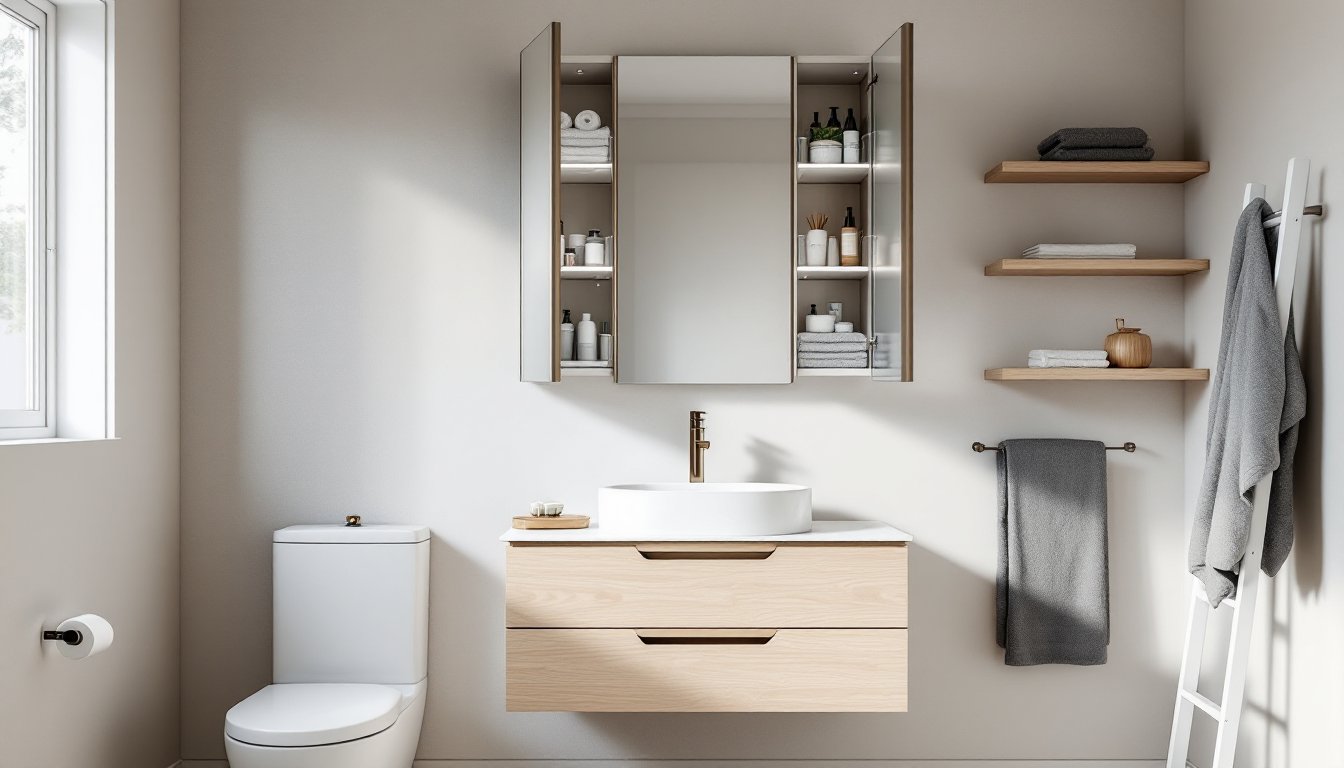
A small bathroom doesn’t have to mean cluttered counters and overflowing cabinets. Most powder rooms and half baths measure 40–60 square feet, leaving little room for bulky linen closets or freestanding storage. The solution isn’t just buying more organizers, it’s rethinking how every vertical surface, hidden nook, and piece of furniture works double-duty. Whether working with a cramped rental or planning a remodel, homeowners can reclaim usable space with the right mix of wall-mounted fixtures, built-ins, and smart interior organizers. This guide covers practical, code-compliant storage strategies that work in tight quarters without requiring demolition or a contractor.
Small bathrooms present a unique challenge: they’re high-traffic spaces that house toiletries, linens, cleaning supplies, and grooming tools, all in less than 50 square feet. Without deliberate storage planning, counters pile up with products, moisture accumulates around clutter, and daily routines become frustrating.
Inadequate storage leads to functional problems. Bottles and containers left on wet surfaces develop mildew. Items stacked haphazardly topple when someone reaches for a towel. Cleaning becomes harder when every surface is crowded. For homes with only one bathroom, the problem multiplies, multiple users mean more products competing for the same six inches of counter space.
Building codes don’t mandate minimum storage, but they do set clearances. The International Residential Code (IRC) requires at least 21 inches in front of toilets and sinks, and 30 inches of clear floor space. That means storage solutions can’t intrude into required clearances or block egress. Wall-mounted and vertical options respect these constraints while maximizing unused height.
Investing in proper storage also protects the home’s value. Buyers consistently rank bathroom storage among top desired features, and well-organized spaces photograph better for resale. Even renters benefit, removable solutions like tension rods and adhesive shelves add function without risking security deposits.
When floor space is scarce, look up. Most small bathrooms have 8-foot ceilings, offering roughly 300 cubic feet of air space, most of it unused. Vertical storage pulls items off counters and out of the way while keeping them accessible.
The wall above a toilet is prime real estate. Over-the-toilet units (often called “spacesaver” shelves) provide two to three tiers of storage without occupying floor space. These metal or wood frames straddle the tank, with shelves reaching 60–70 inches high.
Installation is straightforward. Most units assemble with hex bolts and require no wall anchors, they’re freestanding, resting on the floor behind the toilet. For stability, choose models with weighted bases or L-brackets that secure to wall studs. Always locate studs with a stud finder: drywall anchors alone won’t support loaded shelves above a toilet where moisture weakens adhesive over time.
Store lightweight items on top shelves, extra toilet paper, decorative baskets, rarely used products. Keep daily-use items at eye level. Avoid placing heavy bottles on narrow wire racks: they tip easily. If the toilet tank is close to the wall (less than 3 inches), measure carefully, some units won’t fit.
Floating shelves eliminate bulky legs and frames, creating a clean look while maximizing usable depth. Standard lumber for DIY shelves is 1×6 or 1×8 pine (actual dimensions: 3/4″ x 5.5″ or 7.25″). For a more finished look, use primed MDF or edge-banded plywood, sealed with semi-gloss paint to resist moisture.
Mount shelves into studs whenever possible. Wall studs in bathrooms typically run 16 inches on center. For shelves between studs, use toggle bolts rated for 50+ pounds in 1/2-inch drywall. Install shelves at 48–54 inches above the floor for easy reach without stooping.
Floating cabinets (wall-hung vanities or medicine cabinets) take vertical storage further. Recessed medicine cabinets fit between studs, adding 3–4 inches of depth without protruding into the room. Cutting into a wall requires checking for plumbing and electrical, always shut off power and use a non-contact voltage tester before sawing. If unsure, hire a licensed electrician.
Design inspiration for small space layouts often features narrow floating cabinets flanking mirrors or sinks. These work well in bathrooms as narrow as 5 feet, where a traditional linen closet won’t fit.
Hidden storage keeps bathrooms streamlined and clutter-free. Built-ins require more effort than clip-on organizers, but they add value and function in tight layouts.
Recessed niches are one of the most popular DIY upgrades. A standard 12″ x 12″ niche fits between studs (14.5 inches clear between framing) and is ideal for in-shower storage. Frame with 2×4 lumber, line with cement backer board, and tile to match the surround. Slope the bottom shelf slightly toward the shower to prevent water pooling. Niches work in non-load-bearing walls only, if the wall supports a floor or roof above, consult a structural engineer.
Toe-kick drawers recover wasted space beneath vanities. Most vanities sit on a 4-inch toe kick: that’s enough height for a slim 3-inch-deep drawer running the width of the cabinet. These work best for flat items, spare washcloths, cleaning supplies, hair tools. Install soft-close undermount slides to prevent slamming. Toe-kick drawers require removing the existing kick plate and routing the front panel, so measure twice.
Behind-the-door storage is underutilized. Over-the-door hooks, racks, and mirrors add storage without tools. For a cleaner look, mount hooks or narrow shelves directly to the back of the door using screws into the door’s solid core (most interior doors have a hollow core with solid rails at the edges, aim for those). Keep stored items lightweight: heavy hooks stress door hinges over time.
Homeowners planning larger remodeling projects often add a pocket door to reclaim swing clearance, then convert that wall space into a narrow floor-to-ceiling cabinet.
In small bathrooms, every piece should work double-duty. Multi-functional furniture adds storage without sacrificing style or floor space.
Vanity stools with hidden compartments provide seating and storage. Look for models with lift-top seats or pull-out drawers. These work in bathrooms with enough clearance for a 16–18-inch-square footprint, typically found in master baths but tight in half baths.
Mirror cabinets combine a necessary fixture (the mirror) with concealed storage. Surface-mounted models add 4–6 inches of depth, while recessed versions sit flush with the wall. Choose models with soft-close hinges and adjustable interior shelves to accommodate tall bottles. Ensure the cabinet doesn’t block light switches or wall sconces: plan placement during rough-in if remodeling.
Towel bars with integrated shelves replace standard bars with a two-tier system: a top shelf for folded towels and a lower bar for hanging. These typically mount 48 inches above the floor and project 10–12 inches from the wall, measure clearance to ensure doors and drawers still open.
Ladder-style racks lean against the wall, using vertical space without drilling. They’re ideal for renters or anyone avoiding permanent installations. Choose racks with rubberized feet to protect flooring and prevent sliding on tile. Decorative examples are common in curated design collections, often styled with rolled towels and small potted plants for visual interest.
External storage is only half the solution. Interior organization prevents cabinets from becoming black holes where products disappear.
Pull-out drawer organizers maximize deep vanities. Most bathroom vanities are 21 inches deep, but reaching to the back is awkward. Install sliding trays or pull-out baskets on undermount slides. These retrofit into existing cabinets with only a drill and screwdriver. Measure interior dimensions carefully, many vanities have center stiles or plumbing that limits drawer width.
Stackable bins and tiered risers make use of vertical cabinet space. Without them, items pile horizontally, wasting the top 6–8 inches. Use clear acrylic bins for visibility, grabbing a bottle without removing everything else is a huge time saver. Group items by category: hair care, skincare, first aid.
Tension rods installed vertically inside cabinets create dividers for flat items like hair straighteners or cleaning bottles. A standard spring-loaded curtain rod fits most cabinet interiors and requires no hardware. This trick works especially well under pedestal sinks, where there’s no built-in storage, add a tension rod and a hanging fabric caddy.
Drawer dividers keep small items from shifting. Custom-fit dividers for makeup, razors, and cotton swabs prevent the dreaded junk-drawer effect. For DIY dividers, cut 1/4-inch plywood or 1/2-inch foam board to fit snugly inside drawers. Measure interior dimensions after the drawer is removed, drawer boxes are often smaller than the exterior face suggests.
For a comprehensive look at organizing systems beyond the bathroom, storage solutions that translate across rooms.
Safety note: Keep medications and cleaning chemicals in locked or high cabinets if children are present. Store aerosol cans away from heat sources like hairdryers or wall heaters.
Final pro tip: Label everything. Even clear bins benefit from small labels on the front. It speeds up morning routines and helps everyone in the household return items to the right spot.
